

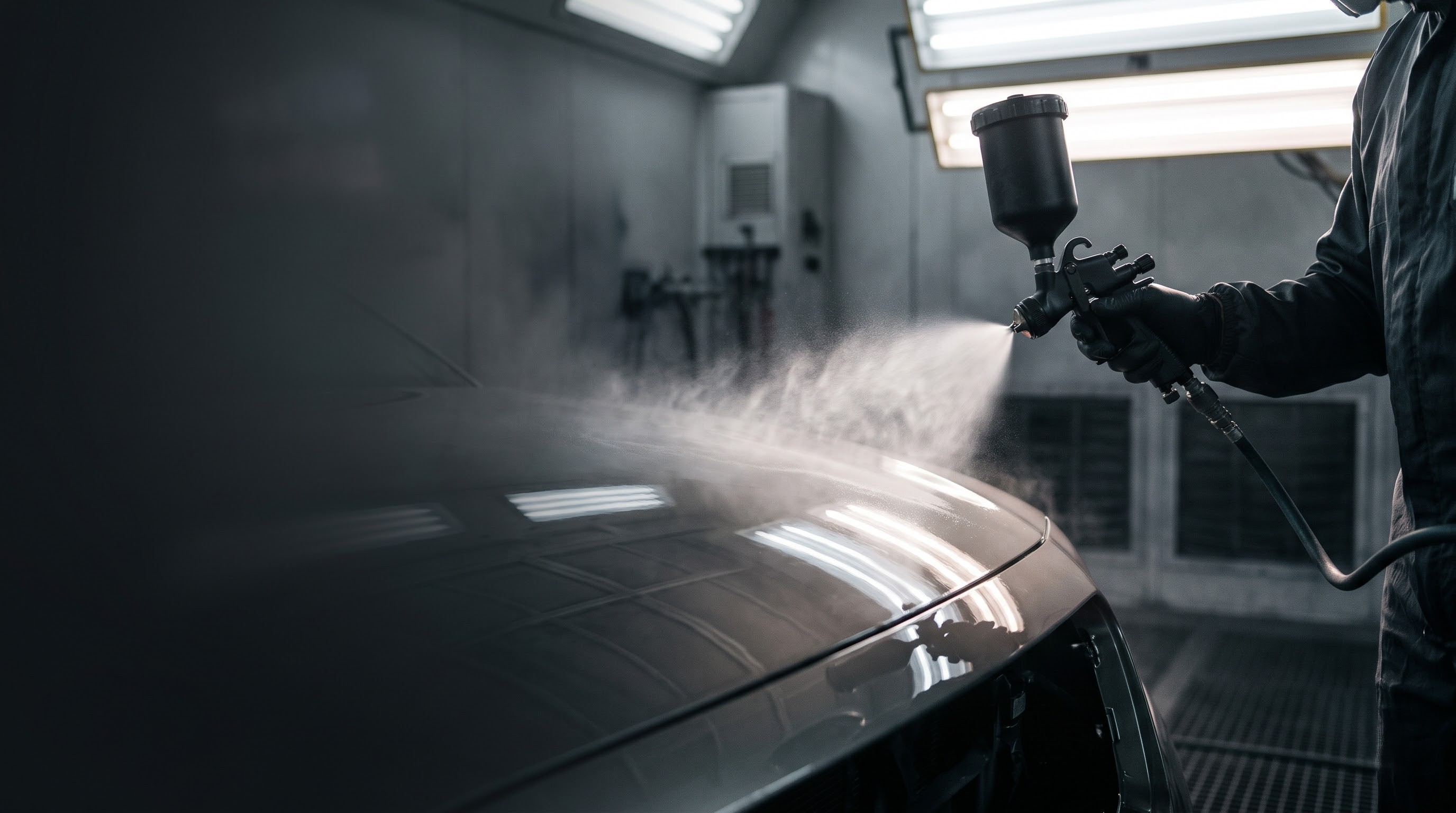
Solid Content vs. Film Build: The Physics of Protection
Standard Medium Solid (MS) clears often flash off too quickly in high Gulf ambient temperatures, trapping volatile solvents and leaving a porous micro-structure vulnerable to airborne silica sand erosion. High Solid (HS) and Ultra High Solid (UHS) 2K acrylic urethanes maintain a dense, cross-linked polyurethane matrix that resists micro-abrasions.
Thermal Shock Resistance at 50°C Ambient
Vehicles parked in direct Doha sunlight endure sheet-metal temperatures reaching 75°C, followed by rapid cooling during evening humidity cycles. Premium clears like HB Body C496 and Proline 698 incorporate specialized UV absorbers and hindered amine light stabilizers (HALS) that preserve high gloss without embrittlement.
Hardener & Thinner Selection Rule
In Qatar bodyshops during summer (May–October), always pair 2K HS clears with Slow (H754) or Extra Slow (H755) hardeners and Slow Thinners (741 Slow) to permit optimal leveling and bubble release before film skinning.
Mirror Finish Leveling & Polishing Window
Thanks to modern acrylic resin chemistry, our HS clears cure to full mechanical hardness within 30 minutes at 60°C booth bake or 4 hours at ambient temperature, allowing detailing technicians to sand and buff with 2000-3000 grit abrasives without risking edge burn-through.