

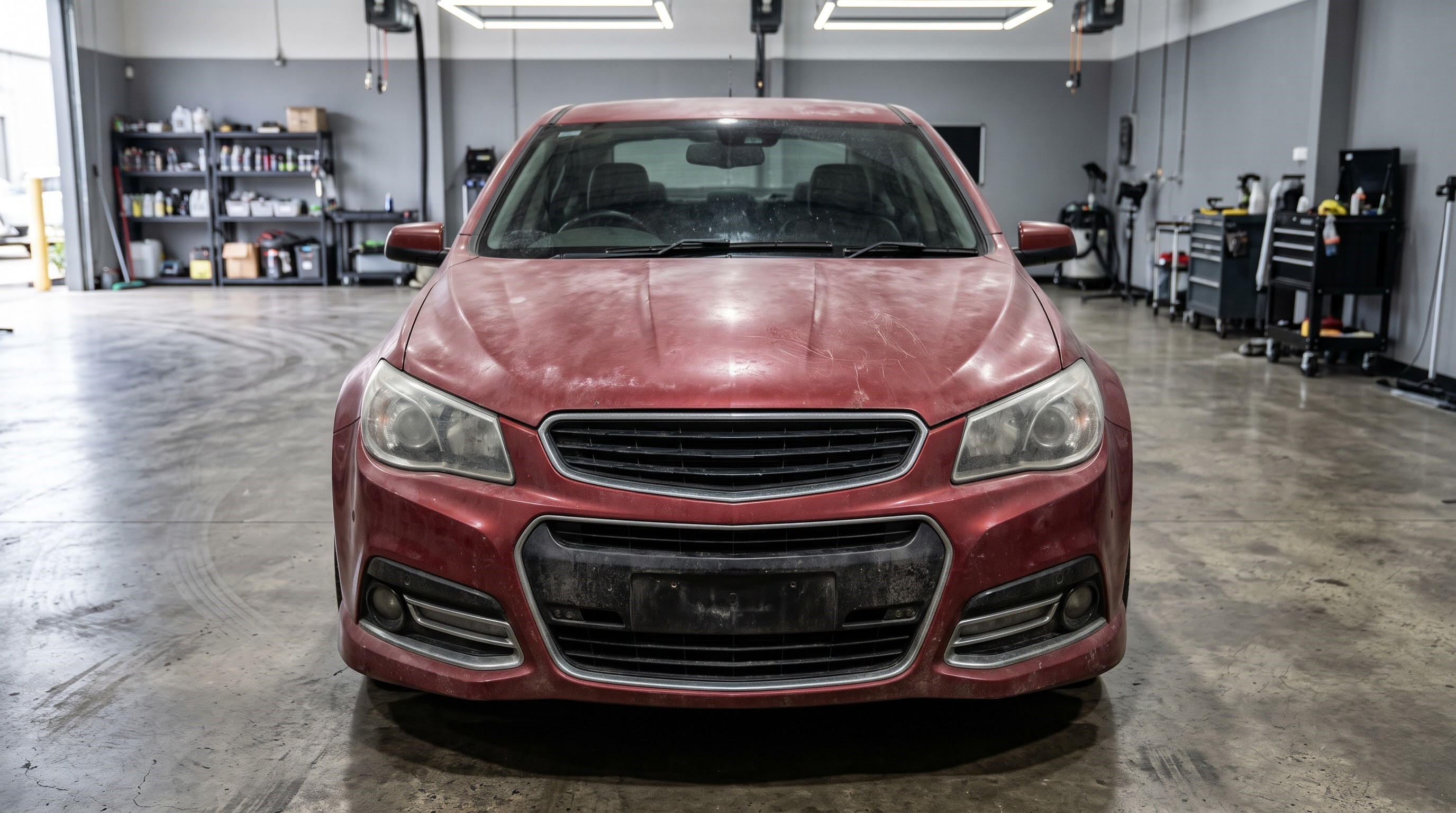
Eliminating Substrate Contaminants
The combination of coastal humidity, saline air, and airborne dust in Doha necessitates strict multi-stage degreasing. Soluble salts and silicone residues from prior tire dressings must be neutralized using waterborne and solventborne cleaners before any mechanical abrasion begins.
Selecting the Right Polyester Filler
Modern lightweight vehicles feature aluminum panels, galvanized sheet metal, and carbon composites. Using standard talc-heavy body fillers on galvanized surfaces leads to osmotic blistering. Technicians must apply zinc-compatible polyester fillers such as HB Body 211 Soft or 255 Zinc-Fill.
Guide Coat Discipline
Never sand high-build 2K surfacers without dry guide coat powder. The contrasting powder reveals microscopic low spots and orange peel irregularities before topcoat application, preventing expensive re-sprays.
Final Pre-Booth Inspection Checklist
Prior to entering the downdraft booth, vehicle panels should receive final dry sanding with P400–P500 DA abrasives, followed by compressed air blow-down with anti-static ionizing nozzles and a gentle wipe with solvent-free tack rags.